
For six years, I’ve been a resident of the battlegrounds. I’ve witnessed PUBG’s journey from its clunky, heart-pounding early access days to the refined tactical shooter it is today. I remember the reign of the super-powered M16A4, the introduction of Miramar’s vast emptiness, and the evolution of countless metas. Through it all, from the chaotic rooftops of Pochinki to the tense, grassy final circles in Erangel, the core principles of winning have been forged in the fire of thousands of matches.
Many players master the mechanical skills—they can control the recoil of a Beryl and snap to a target. But they consistently hit a wall, finishing in the top 10 but rarely clinching the win. Why? Because PUBG is more a game of chess than a game of checkers. The strategic mid-game and the high-pressure endgame are where matches are truly won and lost.
This guide isn’t another breakdown of which gun has the best stats. It’s a deep dive into the tactical knowledge and situational awareness that turns good players into great ones. As an informational resource for my fellow players in Pakistan, India, the US, and across the globe, I’m sharing the three most critical skills, expanded with advanced concepts, that have consistently helped my squad and me secure the Winner Winner Chicken Dinner. This is about transforming from a reactive player into a proactive, strategic force on the map.
Discover even more gaming strategies and culture on Game Dude.
Tactic 1: Mastering Rotations – Thinking Two Circles Ahead
The single biggest mistake I see even experienced players make is reacting to the blue zone instead of anticipating it. A poor rotation is a death sentence, forcing you into predictable paths, unfavorable fights with gatekeepers, and leaving you with no good positions. True map control comes from moving before you are forced to.
How to Execute a Perfect Rotation:
Predict the Shift: This is a fundamental skill. After the first circle is revealed, open your map. The next circle is statistically most likely to shift towards the side with more landmass and away from large bodies of water. My squad immediately identifies 2-3 probable compounds or high-ground positions for the next circle after the current one. We always have a primary, secondary, and tertiary plan. This foresight means that while other teams are scrambling, we are already fortified.
The “Edge vs. Center” Fallacy Explained: New players hear “get to the circle” and sprint for the geographical center. This is a massive trap. The center is a chaotic kill zone with threats from 360 degrees. A far better strategy is to play the “power edge”—the short side of the zone. By positioning yourself here, you minimize the angles you can be attacked from. With the blue zone at your back, you create a safe zone, allowing you to focus your attention forward and pick off teams making desperate, late rotations.
Vehicle Choice is a Strategic Decision:
- UAZ/Mirado: Loud, durable, and good cover when destroyed. Best for aggressive pushes across open fields where you fully expect to take fire. It announces your presence but gives you the best chance of survival during a contested rotation.
- Dacia: The master of stealthy rotations. Its quieter engine and lower profile have allowed my team to slide into compounds unnoticed countless times. It’s less durable, but the element of surprise it provides is often more valuable than armor.
- Motorcycle/Buggy: High-risk, high-reward. Use these for quick solo repositions, scouting missions, or when you absolutely have to outrun the zone. Their speed is their defense, but a single well-placed shot from a sniper can end your match.
For more insights on strategy and top game picks, check out the Best Offline Android Games for Entertainment Anywhere.
Advanced Rotation Concepts:
Reading the Plane Path: Before you even land, the plane’s path gives you a massive amount of information. Most players will drop near the path. By drawing a mental line of the flight path on your map, you can predict where the majority of players will be rotating from in the mid-game. Position yourself to intercept them, not to be intercepted by them.
Map-Specific Rotations:
- Erangel: Bridge camping is a classic, but often predictable, strategy. A smarter Erangel rotation involves using boats to take control of the coast or making an early play for a central compound like School or Rozhok if the circle allows.
- Miramar: This map is all about ridges and vehicles. Control the high ground, and you control the game. Rotations here must be planned from ridge to ridge, and a durable vehicle like the Mirado is non-negotiable for crossing the vast, open deserts between compounds.
- Sanhok: Forget long, planned rotations. Sanhok is about short, sharp movements. Sound is everything. On this map, stealth is often better than speed. Walking or crouching to your next position can give you the jump on teams noisily driving around.
If you’re a mobile gamer, see how the iPhone 16 vs 17: Which is Best for Gaming? could impact your performance in fast-paced games like PUBG.

Tactic 2: The Art of the Compound Breach
You’ve rotated perfectly, but the ideal compound is already occupied. This is the moment of truth. Rushing in blindly is how you donate your loot to the enemy. A coordinated, intelligent breach is a work of art that dismantles a defending team piece by piece.
My Tried-and-True 4-Step Breach Plan:
- Information First (The “Info Man”): A breach without intel is just gambling. Before anyone pushes, one dedicated player (ideally with a 6x or 8x scope) must get information. How many are there? Are they on the roof or holding windows? Is there a player isolated from their team? Even hearing a reload or the direction of footsteps is invaluable intel. Jiggle-peeking corners can draw a shot and reveal a position without over-exposing yourself.
- Utility Onslaught: I cannot stress this enough: do not push a building without using your throwables. It is the single most effective way to gain an advantage.
-
- Molotovs & Frags: Start with Molotovs to force players out of strong positions (like behind a staircase). Follow up with perfectly “cooked” frag grenades to secure kills or force them to move into the open. The goal is to create chaos and break their defensive setup before you enter.
- Smokes & Stuns: Use smoke grenades to create a wall, blocking off enemy sightlines as your team moves to the entry point. A well-placed stun grenade right before you enter can completely disorient an opponent, giving your entry fragger an easy kill.
- Molotovs & Frags: Start with Molotovs to force players out of strong positions (like behind a staircase). Follow up with perfectly “cooked” frag grenades to secure kills or force them to move into the open. The goal is to create chaos and break their defensive setup before you enter.
- Create Two (or More) Points of Pressure: The golden rule of breaching is to never attack from one direction. A squad defending a building can easily hold one door. They cannot hold two doors and a window simultaneously. If you have a squad of four, send two to the front and two to a side entrance. This splits their attention, forces them into a communication crisis, and guarantees you a more favorable fight.
- Execute the “Trade”: When you enter a building, your primary job is to be “tradeable.” This means if you are the first one in and get knocked down, your teammate right behind you must be in an immediate position to eliminate the player who knocked you. This mindset is crucial. You are not just fighting for yourself; you are fighting to create an opening for your team. Playing close to your entry partner ensures a 1-for-1 trade at worst, and a complete squad wipe at best.
Squad Roles for a Perfect Breach:
- Entry Fragger: The most aggressive player, equipped with a powerful close-quarters weapon (Vector, ACE32). Their job is to get in first, create chaos, and secure the first knock.
- Support/Trader: Right on the entry’s tail. Their job is to instantly trade the kill if the entry fragger goes down. Often carries the versatile M416.
- Utility Specialist: The mastermind. This player coordinates the grenade attack and calls the push. They are focused on breaking the enemy’s setup before the fight even begins.
- Overwatch/Rear Guard: This player holds the flank. While the breach is happening, they are watching for third parties and cutting off enemy escape routes. In a multi-building compound, they may provide sniper support from an adjacent rooftop.
Love tactical guides? Read more in-depth insights into gaming culture and strategies on Game Dude.

Tactic 3: The Situational Loadout – Why Your M416 Isn’t Always King
For years, the M416 with a 6x scope (sprayed at 3x) has been the meta. It’s a fantastic, reliable weapon, but clinging to it in every situation is a sign of an inflexible player. True expertise is about choosing your weapons and attachments based on the circle, the terrain, and your specific role in the squad.
The Urban Brawler (Cities like Yasnaya, Pecado):
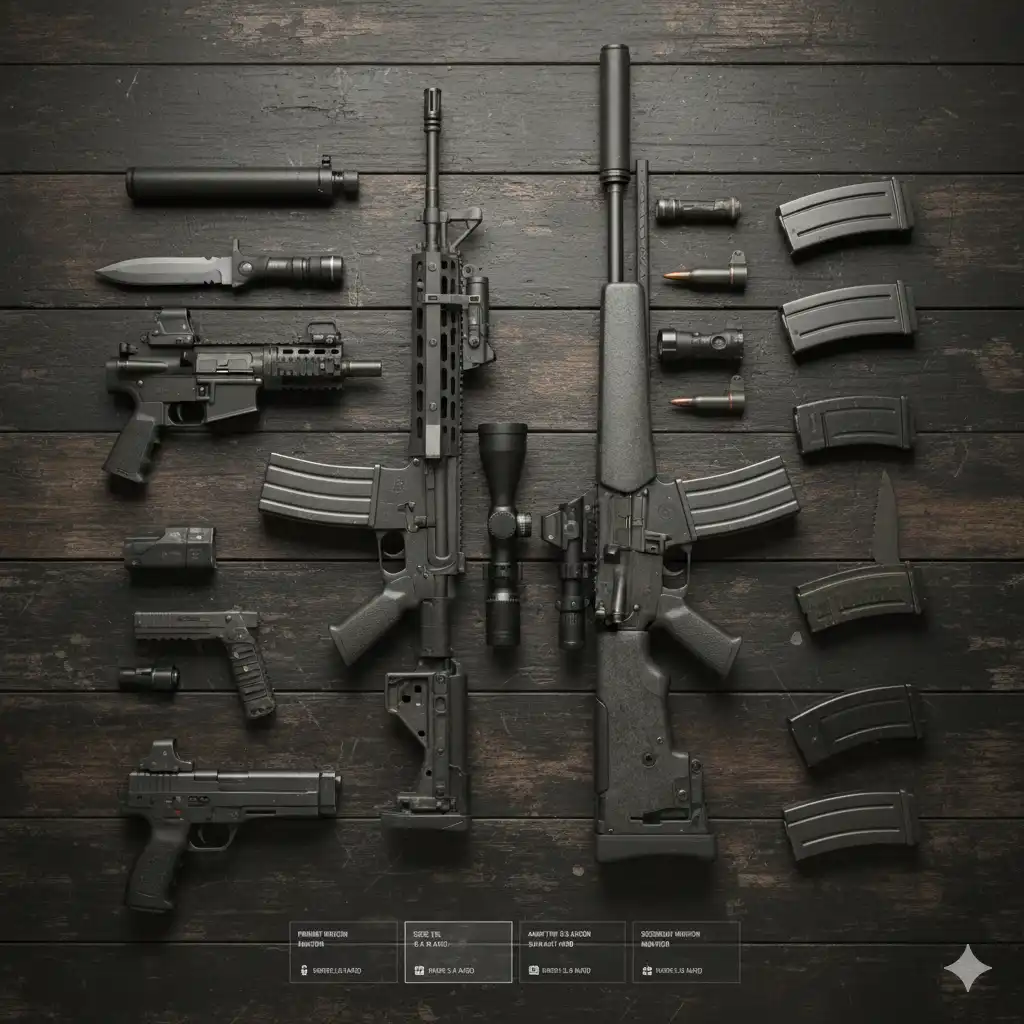
- Primary: An SMG (Vector/UMP45) or a hard-hitting 7.62mm AR (ACE32/Beryl). The faster rate of fire and high damage are essential for the sub-15-meter fights common in city buildings.
- Secondary: A DMR like the Mini-14 or SKS. This gives you the flexibility to hold angles on the street from rooftops and pressure teams in adjacent buildings.
The Ridge Warrior (Open fields of Erangel/Miramar):
- Primary: A stable 5.56mm AR (M416/SCAR-L) with a good scope. This is your reliable workhorse for mid-range sprays.
- Secondary: A bolt-action sniper (Kar98k/M24). On these maps, information is key, but a single headshot that knocks an enemy is the ultimate fight-starter. In my experience, having at least two players on the team with a bolt-action is crucial for controlling open territory.
The Underrated Powerhouse – The DP-28: This LMG is a monster. If your strategy involves locking down a compound, having a player prone on a rooftop with a DP-28 is the ultimate area denial tool. Its bipod makes it a laser beam, and its 47-round clip can suppress an entire team, allowing your squad to rotate safely.
Attachments are NOT Optional:
- Muzzle: A compensator is almost always the best choice for reducing recoil on your primary spraying weapon. A suppressor is a powerful tool for your DMR/Sniper, hiding your location and causing confusion.
- Grip: This is where true knowledge comes in. A Vertical Grip is best for controlling vertical recoil (Beryl, Tommy Gun). A Half Grip is a fantastic all-arounder for reducing both vertical and horizontal recoil. A Thumb Grip significantly speeds up your aim-down-sights time, which can be life-or-death in close quarters. Experiment and learn which grip best complements your weapon.
Interested in exploring the broader world of gaming tech and performance? Take a look at Creative Rhythm Games & More: The Atlantic Games Experience and dive deeper into the variety Game Dude covers.
Final Thoughts: From Experience to Victory
Winning in PUBG is a game of inches, solved with miles of strategy. These tactics—proactive rotations, disciplined breaches, and adaptable loadouts—are not flashy tricks you see in highlight reels. They are the foundational, repeatable strategies that my squad has honed over thousands of hours to consistently perform at a high level. They are about controlling space, managing information, and executing as a team.
Integrate these concepts into your gameplay. Talk about them with your team before the match. Analyze your deaths and ask yourself: “Was it a bad rotation? Did we breach without enough utility? Was I using the right weapon for that fight?” Adopting this strategic mindset is what will carry you from the frustration of mid-game deaths to the exhilaration of that final, glorious screen: Winner Winner Chicken Dinner.
Written by
YourIn−Vincenzo/M Hasaan Ijaz
A dedicated PUBG player since its earliest days, I have logged over 8,000 hours on the battlegrounds. With 6 years of competitive and casual experience, my goal is to share practical, hard-won knowledge to help elevate the community.
Want more? Visit Game Dude for more expert articles, tips, and gaming inspiration.